Guide
10 Medicinal Herbs to Grow at Home, Ranked by Difficulty
Most lists of medicinal herbs treat all ten as equally beginner-friendly. They are not. Here is the honest ranking, and the one free step that fixes the three hardest.
By Sohail Akhtar · Updated August 2026
These ten species — chicory, yarrow, California poppy, marshmallow, chamomile, evening primrose, lavender, echinacea, calendula and feverfew — form the classic beginner's medicinal herb garden. They show up together in seed kits, in old herbals, and in most “grow your own remedies” lists.
What those lists rarely tell you is that the difficulty range across them is enormous. Calendula is close to foolproof. Lavender defeats experienced gardeners routinely. Sowing all ten the same way on the same weekend is the fastest route to concluding you have a black thumb, when in fact you have a stratification problem.
Tier 1 — Easy (5 of 10)
Start here. These germinate readily in ordinary conditions, need no special treatment, and several will flower in their first season.
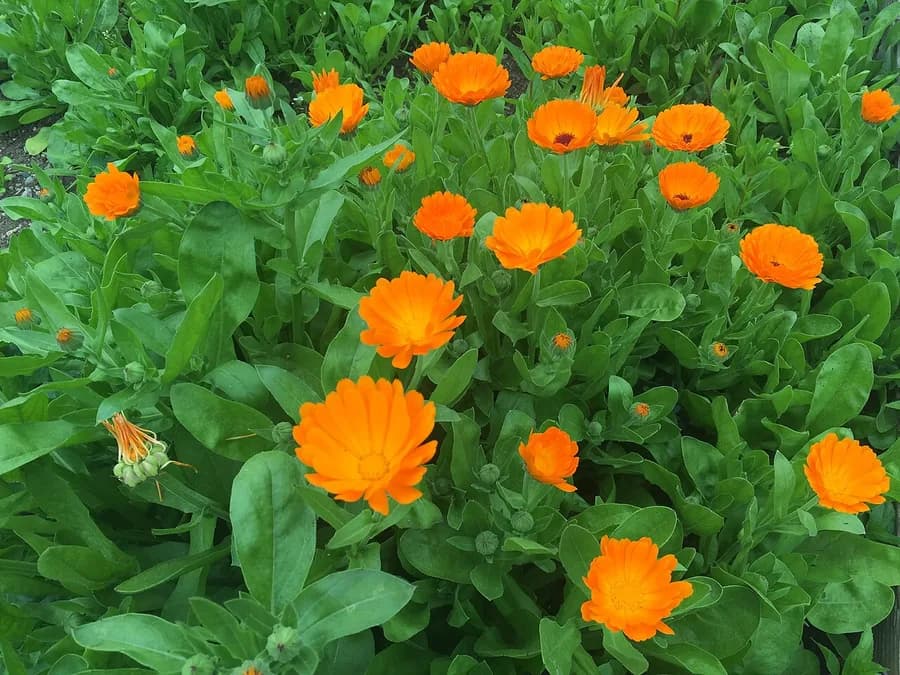
Calendula
EasyCalendula officinalis · Annual · germinates 7–14 days
Calendula germinates quickly and reliably in ordinary soil, tolerates poor ground, and flowers within about two months of sowing. It self-seeds freely, so one packet realistically gives you calendula for years. Deadhead regularly and it will keep producing until frost.
Worth knowing: If you only succeed with one plant from this kit, it will be this one.
Full calendula growing guide →
Photo: Betty Cai / Wikimedia Commons (CC BY-SA 4.0)
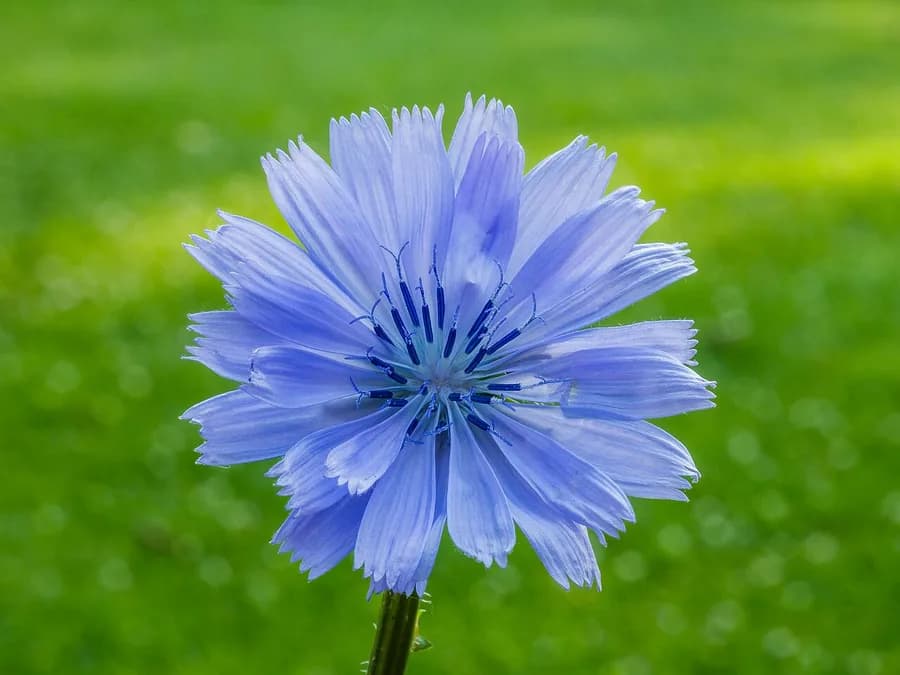
Chicory
EasyCichorium intybus · Perennial · germinates 7–14 days
Chicory forms a deep taproot, so direct sow where it will stay — it resents transplanting. It is genuinely drought tolerant once established and produces sky-blue flowers that open in the morning. Be aware it can naturalise readily in some regions.
Worth knowing: Check whether chicory is considered invasive in your area before planting it out.
Photo: Agnes Monkelbaan / Wikimedia Commons (CC BY-SA 4.0)
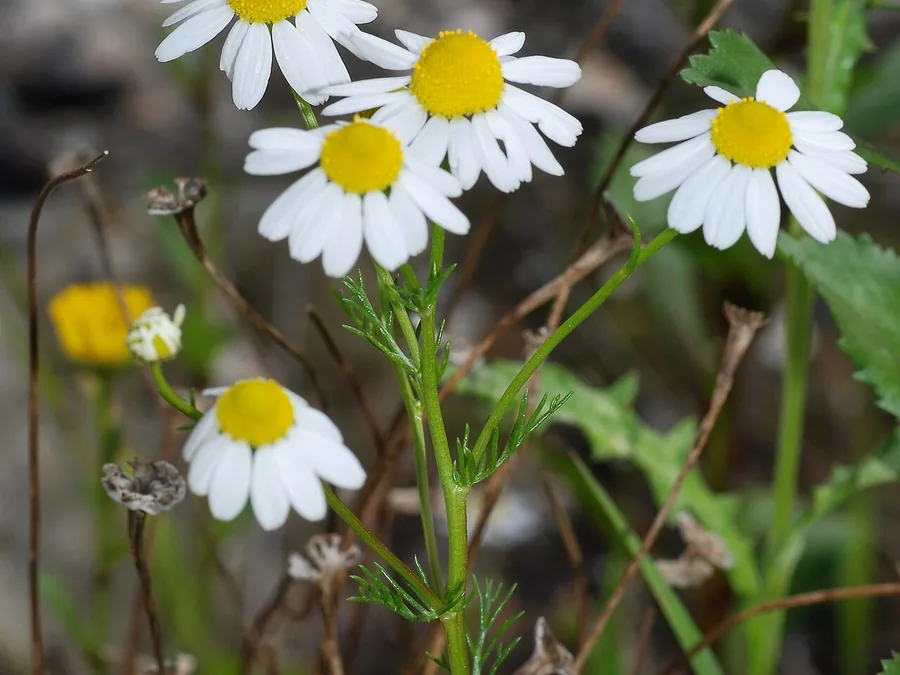
German Chamomile
EasyMatricaria recutita · Annual · germinates 7–14 days
The single most common mistake with chamomile is covering the seed. It requires light to germinate — press it onto the soil surface and keep it consistently moist until it sprouts. After that it is undemanding and will self-seed for following years.
Worth knowing: Surface sowing means the seedbed must not be allowed to dry out. This is the one point where chamomile is fussy.
Full german chamomile growing guide →
Photo: Alvesgaspar / Wikimedia Commons (CC BY-SA 3.0)
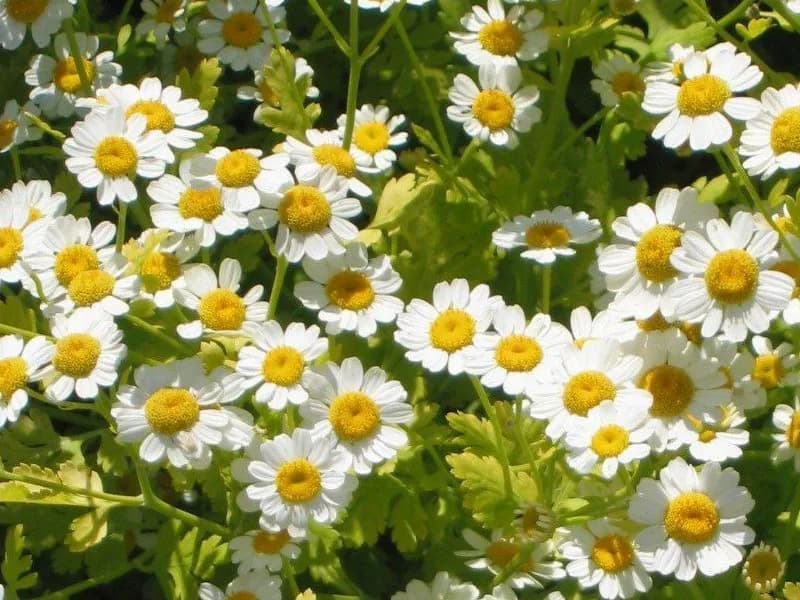
Feverfew
EasyTanacetum parthenium · Short-lived perennial · germinates 10–14 days
Like chamomile, feverfew needs light to germinate, so surface sow. Once established it self-seeds aggressively and will colonise a bed if you let it. Many gardeners treat it as a plant to contain rather than encourage.
Worth knowing: Expect volunteers everywhere the following spring. Plant it where that is welcome.
Photo: Wikimedia Commons contributor / Wikimedia Commons (CC BY 2.5)
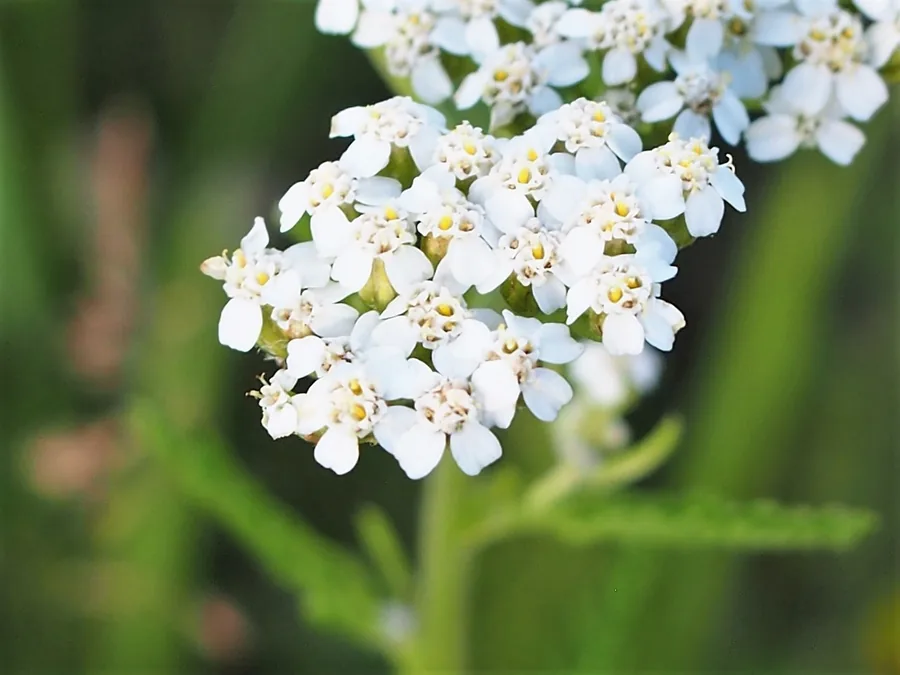
Yarrow
EasyAchillea millefolium · Perennial · germinates 10–14 days
Yarrow needs light to germinate and benefits from being started in trays where you can control moisture. It is slow in its first year and often does not flower until year two — this is normal and not a seed failure. Once established it is exceptionally hardy and spreads by rhizome.
Worth knowing: Do not expect flowers the first summer. Patience here is normal, not failure.
Photo: Agnieszka Kwiecień (Nova) / Wikimedia Commons (CC BY-SA 4.0)
Tier 2 — Easy, with one specific catch (2 of 10)
Neither of these is difficult. Both have one requirement that, if you miss it, produces what looks like total failure.
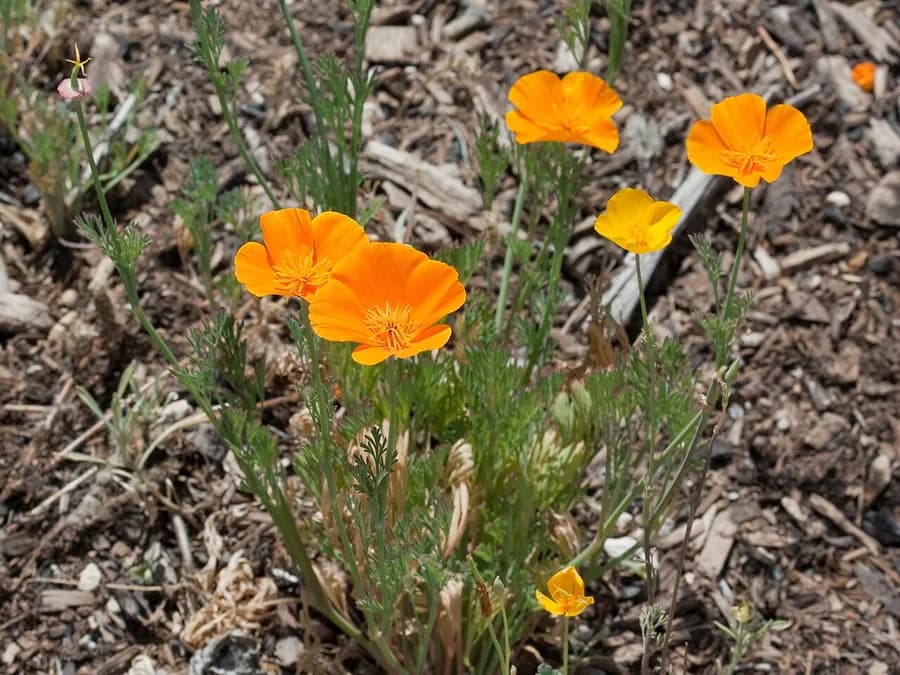
California Poppy
ModerateEschscholzia californica · Annual or short-lived perennial · germinates 14–21 days
California poppy forms a taproot and strongly dislikes root disturbance, so it must be direct sown where it is to flower — starting it in pots and transplanting is the usual cause of failure. It prefers cool soil and poor, well-drained ground. Overwatering and rich soil both reduce flowering.
The catch: Do not start this one indoors. Sow it directly or expect disappointment.
Full california poppy growing guide →
Photo: Kaldari / Wikimedia Commons (CC0)
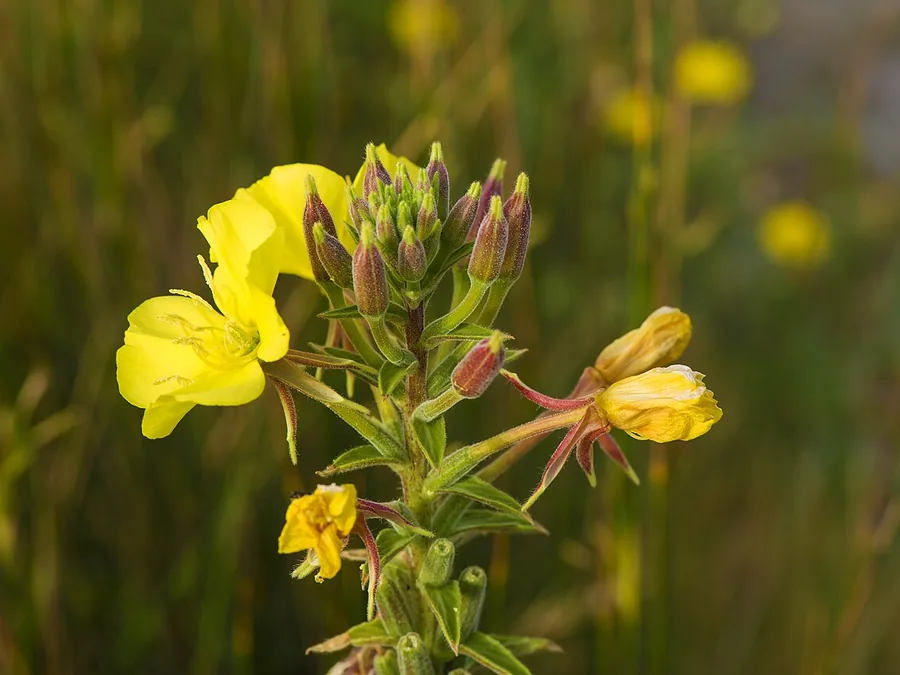
Evening Primrose
ModerateOenothera biennis · Biennial · germinates 14–21 days
Evening primrose spends its entire first year as a low rosette of leaves and does not flower until its second summer. Nothing has gone wrong if you see no flowers in year one — that is the plant's normal lifecycle. It self-seeds well, so after the initial wait it sustains itself.
The catch: This is the most commonly misdiagnosed 'failure' in the kit. It is a biennial. Year one is leaves only.
Full evening primrose growing guide →
Photo: Christian Ferrer / Wikimedia Commons (CC BY-SA 4.0)
Tier 3 — Genuinely difficult (3 of 10)
These three are where people give up. In each case the difficulty is a property of the species, not of the seed you bought — and in each case the same free intervention makes a substantial difference.
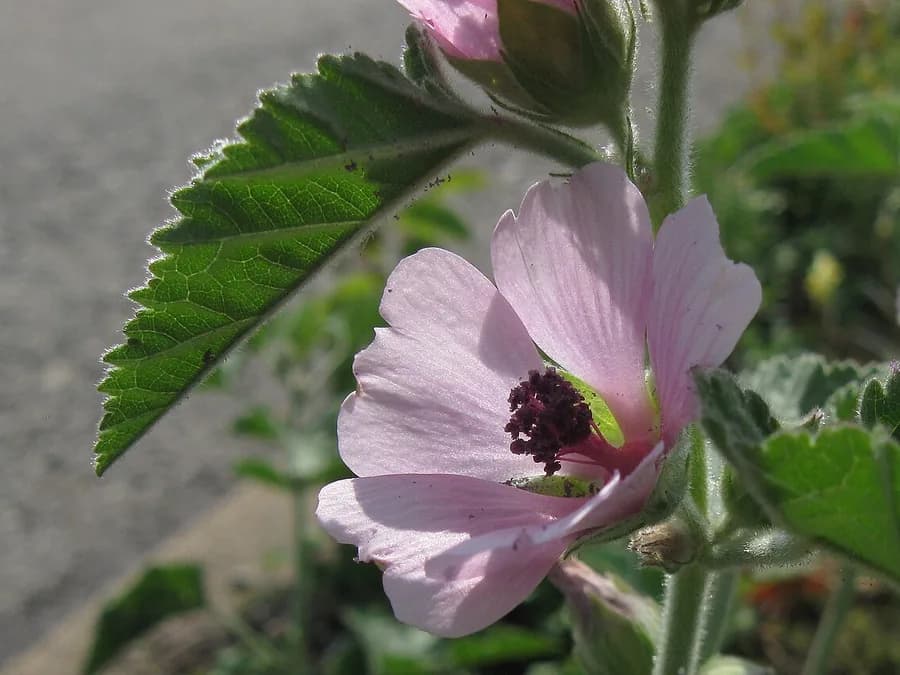
Marshmallow
HardAlthaea officinalis · Perennial · germinates 14–28 days, erratic
Marshmallow germination is noticeably more consistent after a few weeks of cold, moist stratification in the refrigerator. It also genuinely prefers damp ground — it is a plant of wet meadows — so it struggles in dry beds. Give it time and water and it becomes a large, long-lived perennial.
Worth knowing: Stratify this one. Sown straight into warm soil, germination is often poor.
Full marshmallow growing guide →
Photo: Cbaile19 / Wikimedia Commons (CC0)
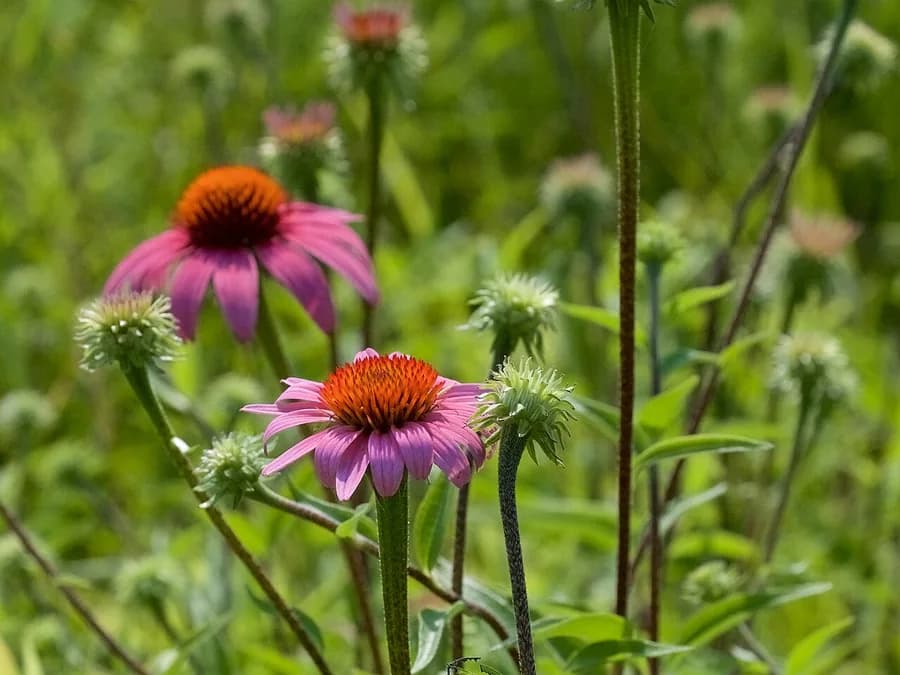
Echinacea (Purple Coneflower)
HardEchinacea purpurea · Perennial · germinates 10–30 days, erratic without stratification
Echinacea germinates erratically when sown straight into warm soil. Four weeks of cold, moist stratification — seed in damp sand or a barely-damp paper towel in a sealed bag in the refrigerator — dramatically improves both rate and evenness. It is a true perennial and commonly spends year one building a root system without flowering.
Worth knowing: Along with lavender, this is the seed that generates the most complaints. Stratification is the difference between poor and good results.
Full echinacea growing guide →
Photo: Eric Hunt / Wikimedia Commons (CC BY-SA 4.0)
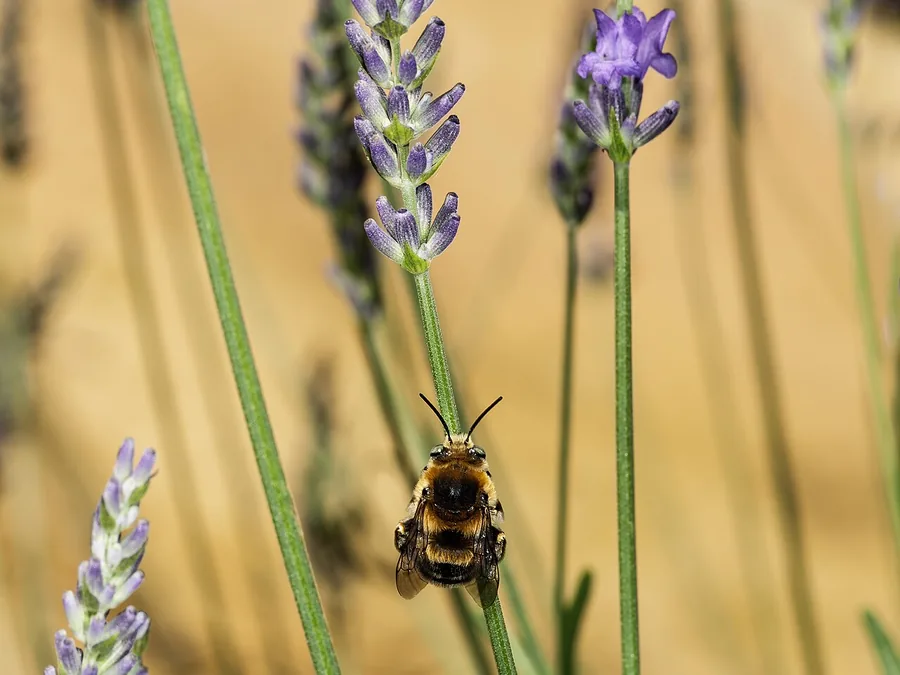
Lavender
HardLavandula angustifolia · Perennial · germinates 14–30+ days, often uneven
Lavender is well known among growers as slow and unreliable from seed — commercial nurseries typically propagate it from cuttings for exactly this reason. Expect uneven germination even when you do everything right. Cold, moist stratification helps, as does surface sowing with warmth and light and considerable patience. It also needs sharp drainage and dislikes wet feet.
Worth knowing: If any seed in this kit underperforms for you, it will most likely be this one. That is the species, not the supplier.
Photo: Didier Descouens / Wikimedia Commons (CC BY-SA 4.0)
The effect of stratification is easy to dismiss as gardening folklore. It is not — here it is tested side by side on coneflower seed:
What to expect in year one
Lifecycle matters as much as germination difficulty, and it is the source of most misplaced disappointment:
- Flowers in year one: calendula, chamomile, California poppy, chicory, feverfew
- Usually year two: yarrow, echinacea, marshmallow, lavender
- Definitely year two — it is a biennial: evening primrose. It produces a rosette of leaves in year one and nothing else. This is not a failure.
A sensible order to plant them in
- Put the Evening Primrose, Marshmallow, Echinacea, Lavender seed in the refrigerator first — it needs a month of lead time.
- While that runs, sow calendula and chamomile. Fast wins build confidence and tell you whether your conditions are broadly right.
- Direct sow California poppy where it will stay. Do not start it in pots.
- Sow chicory, feverfew and yarrow — remembering that feverfew and yarrow are surface sown, as they need light.
- After four weeks, sow the stratified seed. Give lavender warmth, light and considerably more patience than feels reasonable.
On “medicinal”
These plants are called medicinal because of their documented history in folk and traditional practice, some of it stretching back centuries. That history is genuinely interesting and worth knowing as part of why these particular species have been grown together for so long.
It is not the same as clinical evidence. Traditional use tells you what people did, not what works. Nothing in this guide is a claim that any of these plants treats, prevents or cures any condition, and growing them should be approached as gardening rather than as healthcare.