Growing guide
How to Grow Yarrow From Seed (And Why Year One Looks Like Failure)
Yarrow is genuinely easy to grow and genuinely frustrating to grow from seed, because everything it does in the first year looks like nothing happening.
By Sohail Akhtar · Updated 25 August 2026 · Achillea millefolium · Perennial
Difficulty
Easy
Germination
10–14 days
Sow depth
Surface sow — needs light to germinate
First flowers
Often flowers in year two
Spacing
30–45 cm (12–18 in)
Sun
Full sun, sharp drainage
When to plant yarrow seeds
Yarrow is a hardy perennial that does not require a cold period to germinate, which puts it among the easier perennials in this collection. The complication is timing against its slow first year.
Sow indoors six to eight weeks before your last frost so seedlings have as long a first season as possible to build roots, or sow directly outdoors in spring once the soil has warmed. An early-autumn direct sowing also works in most temperate regions and lets the plants establish before winter.
Whichever you choose, the plant is investing in roots rather than flowers this year. Giving it a longer season is the main thing you can do to help.
- Six to eight weeks before last frost: sow indoors in trays for the longest first season.
- Spring, after soil warms: direct sow where plants are to grow.
- Early autumn: direct sow so seedlings establish before winter, in regions with mild enough conditions.
Surface sow — yarrow needs light
Yarrow seed is tiny and requires light to germinate. Do not bury it. Press it onto the surface of moist compost so it makes good contact, and leave it uncovered, or dust it with the barest scatter of fine vermiculite if you are worried about it drying out.
Because the seed is so small and sits on the surface, moisture control is the whole game. A tray dries out from the top down, and surface-sown seed is the first thing to suffer. Covering the tray with a clear lid or a sheet of glass until germination keeps humidity steady without burying anything.
Expect seedlings in roughly 10 to 14 days. They emerge very small and stay small for a while, which is normal.
- Press seed onto the surface of moist compost. Do not cover with soil.
- Keep humidity up with a clear lid rather than by watering heavily from above.
- Water from below where you can, so the seed is not washed about.
- Thin or transplant to about 30–45 cm (12–18 in) apart once seedlings can be handled.
What the first year actually looks like
This is the part that catches people out, and it is worth saying plainly: yarrow grown from seed usually does not flower in its first summer. It produces a low rosette of feathery, finely divided leaves and appears to stall.
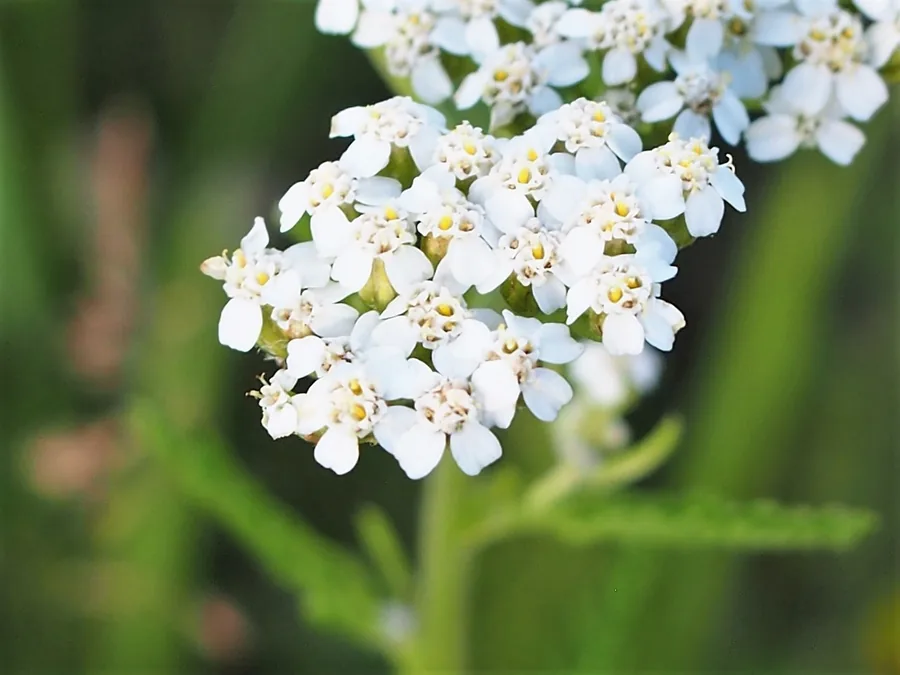
Nothing has gone wrong. The plant is building a root system, and the flat white flower clusters most people are waiting for typically arrive in year two. Gardeners who expect a display in the first season routinely conclude the seed was bad and throw the plant away a few months before it would have delivered.
From year two onward yarrow is exceptionally hardy, drought-tolerant, and long-lived. It spreads by rhizome and will steadily widen its clump.
Soil, sun and how little it needs
Yarrow wants full sun and sharp drainage. Beyond that it is close to indifferent — it grows on roadsides and in thin, poor ground, and that is where it looks best.
Rich, damp soil produces tall, soft growth that flops over in the first heavy rain. If your ground is fertile, expect to stake it or accept the sprawl. Poor soil produces shorter, stiffer, better-looking plants.
Once established it needs essentially no watering in most temperate climates. Overwatering is a far more common cause of trouble than drought.
Keeping it in bounds
Yarrow spreads by underground rhizome as well as by seed, and in a bed it likes, it will keep going. This is a feature if you want ground cover and a nuisance if you wanted a tidy clump.
Dividing the clump every two or three years in spring or autumn keeps it vigorous and gives you free plants. If you want to limit spread, deadhead before seed sets and lift any runners that stray.
It is also one of the better plants here for pollinators — the flat flower heads are easy landing platforms for hoverflies and small beneficial insects.
Traditional use, stated carefully
Yarrow appears in wound-care folklore across a remarkable number of cultures, and its botanical name, Achillea millefolium, references Achilles. It is one of the most widely recorded plants in European and North American folk practice.
That is history, not evidence. Nothing on this page should be read as a claim that yarrow treats, prevents or cures anything, and yarrow can cause skin reactions in some people.