Technique
How to Harvest Coneflower Seeds (Echinacea)
One echinacea plant will hand you several hundred seeds for free, and the whole job takes an afternoon. The two things that trip people up are harvesting too early and not realising how sharp a dried cone is.
By Sohail Akhtar · Published 26 August 2026
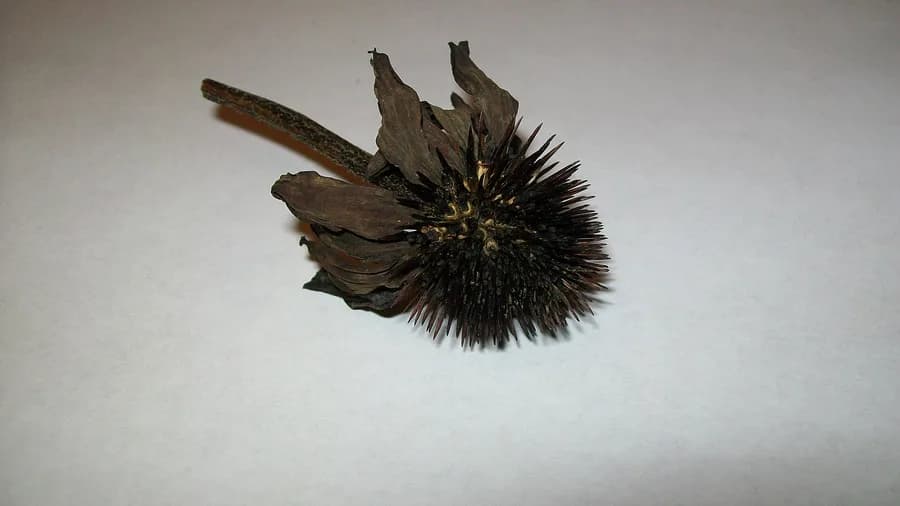
When coneflower seed is ready to harvest
Echinacea tells you when it is ready, and the signal is unambiguous once you know what you are looking at. The cone in the middle of the flower — the part that gives the plant its name — starts the season orange and domed and slightly soft. As seed matures it darkens through brown to almost black, dries out, and hardens. The pink petals shrivel and fall away on their own.
The test is simple: press the cone with a thumbnail. If it dents, or gives at all, the seed inside is still filling and you should leave it. A ready cone is rigid, rattles slightly if you shake the stem, and is genuinely uncomfortable to grip bare-handed.
In most temperate gardens this happens from late summer into autumn, usually six to eight weeks after the flower opened. There is no need to rush it. Seed left on a standing plant keeps perfectly well until you get to it, and the birds will take a share in the meantime.
What coneflower seeds actually look like
This is where most people go wrong, because a broken-up echinacea cone produces two things that look superficially similar and only one of them is seed.
The seed is a small hard achene, roughly 4–5 mm long, tan to greyish-brown, wedge-shaped — broad and blunt at one end, tapering to a point at the other. It feels dense between finger and thumb, and it has real weight for its size.
The chaff is the stiff, dark, spiny bract that surrounded each seed on the cone. It is longer, much darker, sharply pointed, and almost weightless. It is what makes a dried cone painful to handle, and it is what you are trying to remove.
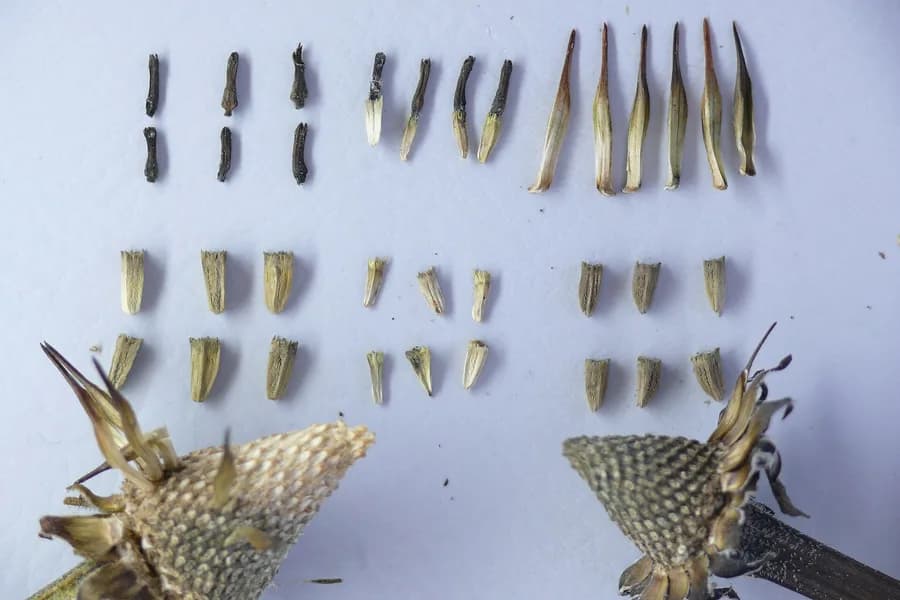
The quickest way to learn the difference is by feel rather than by eye. Roll a pinch of the mixture in your palm: seed feels like grit, chaff feels like dry grass.
How to harvest the seed, step by step
- Wait until the cone is dark brown, dry and stiff, and the petals have shrivelled and dropped. A green or springy cone is not ready, and seed taken early will not germinate.
- Cut the stem 15-20 cm below the head on a dry day. Damp seed heads go mouldy in storage faster than almost anything else you will harvest.
- Wear gloves. The dried bracts around each seed harden into genuinely sharp spines — this is the step everyone underestimates, and it is why most people give up halfway.
- Hold the head over a bowl and rub or roll the cone between gloved fingers. Seed and chaff come away together as a coarse, prickly mixture.
- Separate seed from chaff. Tip the mixture between two bowls in front of a fan on its lowest setting, or breathe gently across it: the light chaff drifts off and the heavier seed stays put.
- Dry the cleaned seed on paper for about a week somewhere airy and out of direct sun, then store it in a labelled paper envelope somewhere cool and dark.
Separating seed from chaff
You do not need to get this perfect. Sowing a little chaff along with the seed does no harm at all — it is what happens in nature every autumn. Cleaning matters mainly because clean seed stores better and is far easier to sow at a sensible spacing.
The method that works with no equipment is winnowing. Put the mixture in one bowl, hold a second bowl below it, and pour slowly from one to the other in front of a fan set to its lowest speed, or outdoors in a light breeze. The chaff is light enough to blow sideways; the seed drops straight down. Repeat three or four times and you will have something close to clean seed.
A kitchen sieve with a mesh that lets seed through but holds the larger bracts also works, and is less dependent on the weather.
Drying and storing
Spread the cleaned seed in a single layer on paper somewhere airy and out of direct sunlight for about a week. Even seed that feels dry carries enough residual moisture to cause trouble in a sealed container.
Store in a paper envelope rather than plastic — paper lets any remaining moisture escape instead of trapping it against the seed. Label it with the species and the year. Somewhere cool, dark and dry is enough; a refrigerator works but is not necessary.
Kept that way, echinacea seed is generally reliable for around three years, with germination tailing off gradually after the first.
Will the seed grow true?
If your plant is straight Echinacea purpurea — the ordinary purple coneflower — seed saved from it will generally produce plants much like the parent.
Named cultivars are a different matter. The coral, white, orange and double-flowered varieties sold in garden centres are usually hybrids, and their seedlings frequently revert to plain purple-pink or come out as an unpredictable mixture. That is not a failure on your part; it is how hybrids behave. If you want an exact copy of a specific plant, divide the clump in spring instead of saving its seed.
Sowing what you saved
Home-saved echinacea seed has the same requirement as bought seed: it germinates poorly when sown straight into warm soil, and reliably after a cold, moist period. You have two options, and the easier one is the one that involves doing nothing.
Either sow it outdoors in late autumn, where winter supplies the cold period naturally, or hold it until late winter and give it about four weeks in the refrigerator before sowing indoors. Both are covered in detail in our cold stratification guide, and the timing calendar is in the guide to growing echinacea from seed.
One honest note on expectations: echinacea grown from seed usually spends its first year building roots and foliage, and flowers in year two. Seed you collect this autumn is unlikely to give you coneflowers next summer.